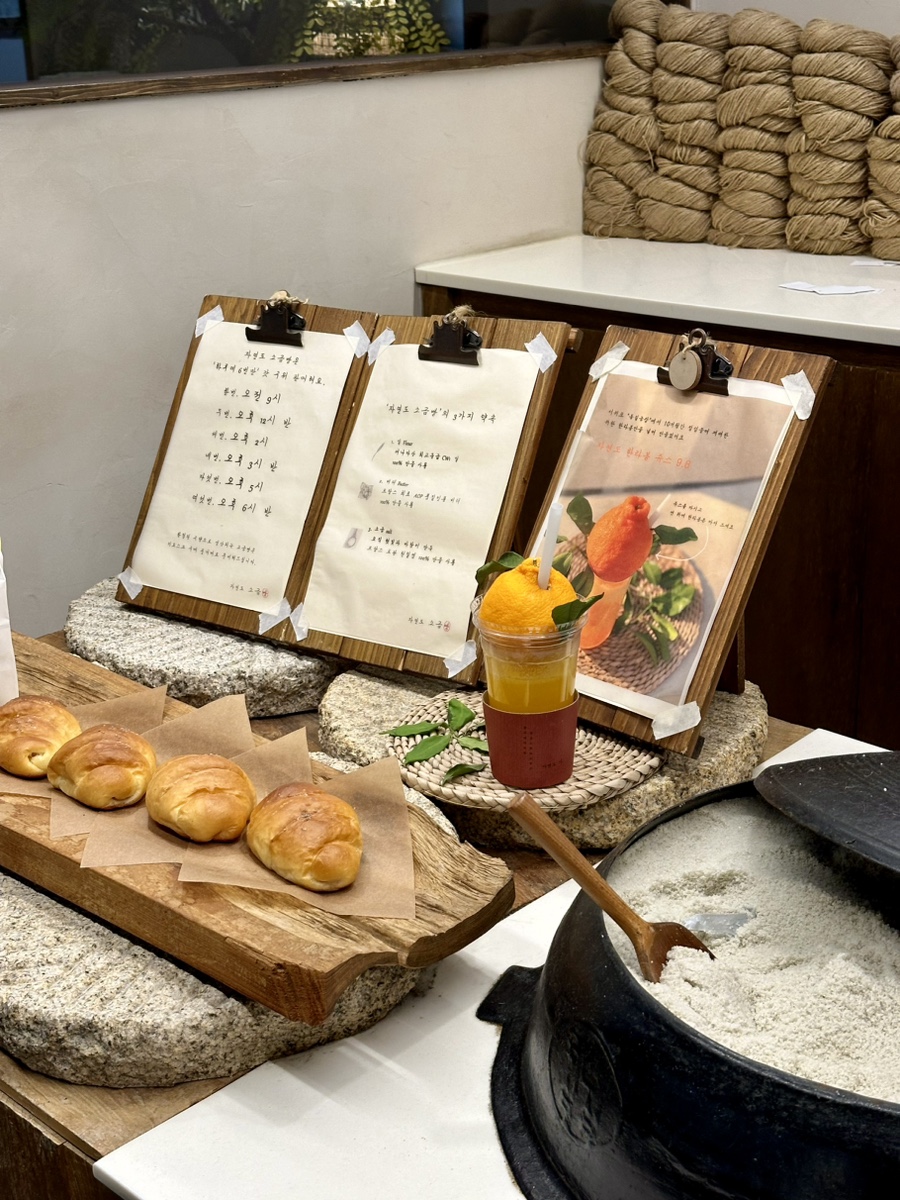
If you’ve seen a long line in the hanok alleys of Ikseon-dong, there’s a good chance it’s for salt bread. Jayeondo Sogeumppang is the most famous place for salt bread in Seoul — they bake 7,000 a day and still sell out — and it’s become one of Ikseon-dong’s signature stops. Here’s what makes it worth the queue, and exactly how to navigate the ordering system so you don’t get lost.

What is salt bread?
Salt bread (sogeumppang) is a soft, buttery roll with a lightly salted, crisp bottom — Japanese in origin, and hugely popular in Korea right now. Jayeondo’s version is the one that started the craze in Ikseon-dong: rich with butter (yes, a little greasy, in the best way), impossibly crisp on the outside and genuinely moist inside. It’s earned every bit of its reputation.

How to order: the queue system
This is the part that confuses first-timers, so here’s the play-by-play. There are two separate lines:
- Payment line — queue here first, and order at the kiosk. Good news for visitors: the kiosk supports English, Chinese and Japanese, and takes cards. After paying, you get a voucher.
- Pickup line — take your voucher, queue in the second line, and hand it to staff when it’s your turn to collect your bread.


There’s a bilingual sign explaining this at the shop, so don’t worry if it sounds fiddly — it moves quickly once you’re in the right line.
Timing: come when it’s fresh
Salt bread is best straight from the oven, and Jayeondo bakes in six batches a day:
9:00am · 12:30pm · 2:00pm · 3:30pm · 5:00pm · 6:30pm
Aim for one of these times and you’ll get bread still warm, with that buttery smell that hits you in the queue. They make 7,000 a day and sell them in sets of four.

Prices & what else to get
- Salt bread — 12,000 KRW per set of four
- Seasonal fruit juice — the shop next door (Jayeondo-ga) does a fresh fruit juice that changes with the season: it was hallabong (Korean citrus) juice in spring, and pineapple juice more recently (around 9,800–12,900 KRW depending on the fruit). There’s also americano, cafe latte and tea.

There’s a pleasant garden-style courtyard with outdoor tables where you can sit and eat, coffee or juice in hand.

Keeping them fresh (if you’re taking them to go)
Salt bread is at its best the same day, at room temperature. If you need to keep them longer, seal and freeze for up to 3 days. To bring back that just-baked texture:
- Air fryer: preheat to 180°C, 3 minutes
- Oven: preheat to 180°C, 3 minutes
- (If frozen, thaw first)
- Do not microwave — it turns them soggy.

Details
- Location: Ikseon-dong Hanok Village, Jongno-gu — 5 min from Jongno 3-ga Station (Google Maps)
- Hours: 9:00am–10:00pm daily
- Baking times: 9:00 / 12:30 / 14:00 / 15:30 / 17:00 / 18:30
- Ordering: kiosk with English/Chinese/Japanese; cards accepted; pay first, then collect with your voucher
- Price: 12,000 KRW per set of four
Verdict
For salt bread in Seoul, Jayeondo Sogeumppang is the name — 7,000 buttery, crisp-bottomed rolls a day, in the prettiest hanok alley in the city. Time your visit to a fresh batch, use the kiosk (it speaks your language), pay-then-pickup, and grab a seasonal juice to go with it. Salt bread is a snack, though, so if you want a proper meal nearby, there’s Songam Onban a few alleys over. Whether you’re already a salt bread convert or just wondering what the fuss is about, this is the place to find out.
