Ikseon-dong is Seoul’s prettiest maze — 1920s hanok alleys reborn as cafes, dessert shops, and photo spots. Most visitors graze on coffee and croffles and move on. That’s a mistake, because tucked into those same alleys is Songam Onban, a proper Korean restaurant that turned an ordinary Saturday dinner into one of my favorite meals in Jongno.

What’s an onban?
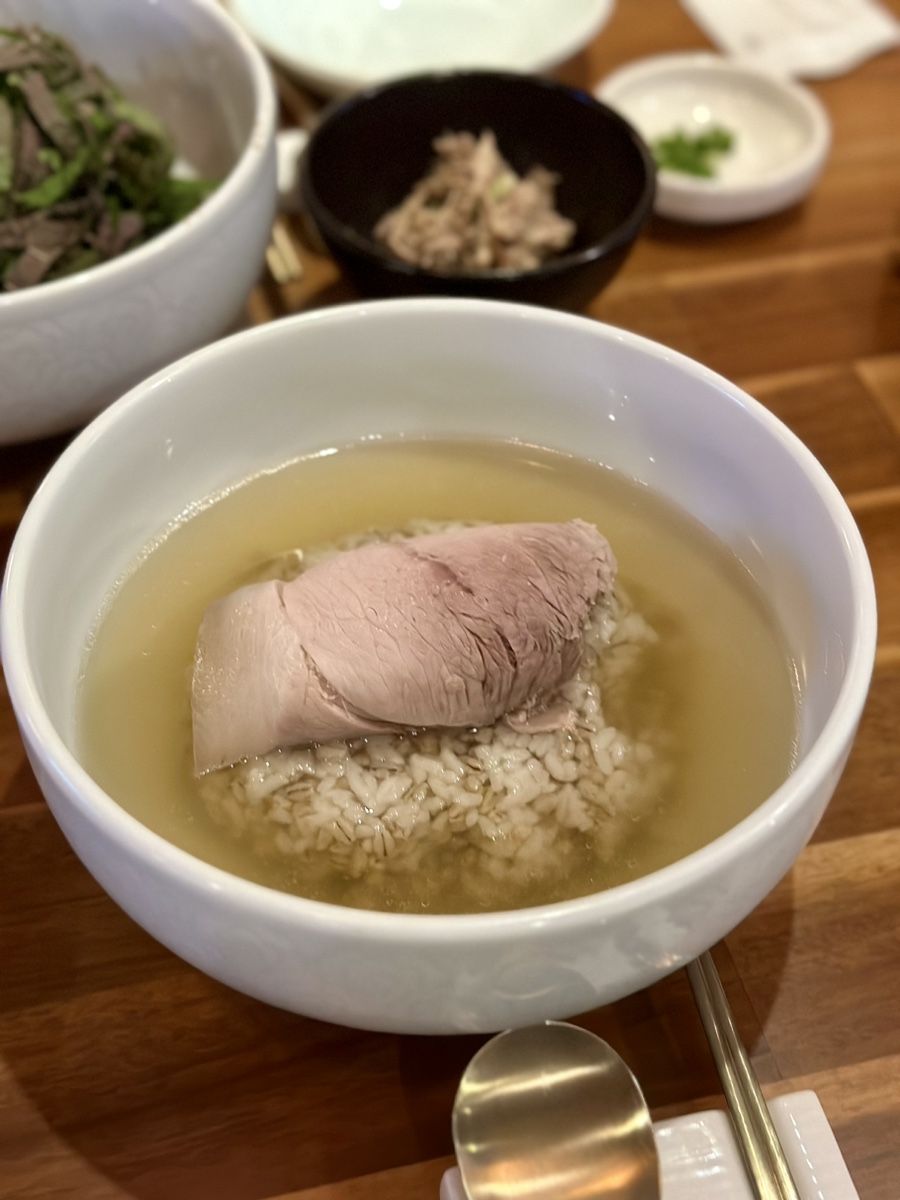
The house specialty, onban (온반), is a warm bowl in the gomtang family — clear, slow-simmered beef broth over barley rice. If you read my Neungdong Minari gomtang post, this is a close cousin: same clean, restorative style, but with its own character. The barley rice is prepared toryeom-style (rinsed through with hot broth so every grain arrives warm and flavor-soaked), and the little barley grains pop pleasantly as you eat.
Songam Onban takes these traditional comfort dishes — onban, suyuk (boiled pork), jeon (savory pancakes) — and executes them with modern precision, in a hanok, with a tablet to order from. Old soul, new machinery.
Getting there
- Address: 31-3 Donhwamun-ro 11na-gil, Jongno-gu, Seoul — 1st floor (Google Maps)
- Subway: Jongno 3-ga Station, Exit 6 — about a 3-minute walk, right inside the Ikseon-dong hanok village
- Hours: 11:30am–10pm daily, break time 4–5pm
- Reservations: available via Naver and CatchTable (Korean platforms). CatchTable has an English app for visitors — CatchTable Global — worth a try if you want to lock in a table. Otherwise, the late-dinner walk-in strategy below works fine.
The space
A dignified hanok interior with generously spaced tables — rarer than you’d think in Ikseon-dong, where most spots are cozy-verging-on-cramped. It’s comfortable for groups, and the wood-and-tile calm of the building does half the work of making the meal feel special.


Ikseon-dong crowds mean this place usually has a wait at peak hours. We walked straight in on a Saturday around 9pm — late dinner is the cheat code here.
Ordering
Order from the tablet on your table — English supported, so no guesswork. The menu runs from the signature onban and suyuk to perilla oil buckwheat noodles, gyoza-style dumplings, yukhoe (Korean beef tartare), seafood-chive pancake, and dried pollack buckwheat noodles. The drinks list is a nice tour of Korean alcohol: cheongju, makgeolli, solsongju (pine liquor), and regional sojus.
Here’s what we had:
Suyuk, medium (32,000 KRW / about $23)
Suyuk is boiled pork served in clean slices — a dish that lives or dies on the quality of the meat, because there’s nothing to hide behind. This one lives: soft, delicate, zero porkiness. It arrives over chives and mushrooms with a solid-fuel warmer underneath, so the last slice is as warm as the first.


The star accessory is the myeongnan ssamjang — a dipping paste made with salted pollack roe instead of the usual soybean base, and it comes with the suyuk automatically, no separate order needed. Dab a little on a slice of pork: the briny salinity amplifies the meat’s sweetness in a way regular ssamjang can’t. I’d never seen this version before, and now I want it everywhere. The seasoned greens and radish salad on the side are excellent too — always a tell of a serious kitchen. And like all banchan in Korea, they’re free with your meal.


Onban, regular (12,000 KRW / about $9)
It looks plain. It is not plain. This was the shock of the meal — a broth so clean and quietly beefy that I understood why the restaurant named itself after the dish. The broth-soaked barley rice gives every spoonful texture, and the whole bowl warms you from the inside out. I’ve eaten a lot of gomtang-style soups; this one is its own thing, and it’s the reason I’ll be back.


Perilla Oil Buckwheat Noodles (11,000 KRW / about $8)
Deulgireum makguksu — chilled buckwheat noodles tossed in nutty perilla seed oil — has become one of Korea’s trendiest comfort dishes, and I’ve tried it all over Seoul. Songam Onban’s is the best I’ve had, full stop. The perilla fragrance is intense (helped by a generous shower of sesame), the noodles are properly seasoned on their own, and the perilla leaf and kimchi toppings tie it together. A few slices of pork come alongside; alternate bites.

A cup of maesil (green plum) tea arrives after the meal, on the house — a small, thoughtful ending. Maesil is traditionally believed to aid digestion in Korea, and you’ll find a number of Korean restaurants serving it after a meal for exactly that reason. When it appears, take it as a good sign about the kitchen.

Local tips
- Order strategy for two people: one onban + suyuk + the noodles to share. You’ll cover the greatest hits.
- Go late (after 8:30pm) or right at opening to dodge the Ikseon-dong wait — or book ahead via the CatchTable Global app.
- Make it a Jongno day: Ikseon-dong alleys → this meal → and if you’re still going next morning, my Cafe Onion Anguk hanok bakery is a 15-minute walk away in Anguk.
Verdict
Ikseon-dong gets written off as a photo-op neighborhood, but Songam Onban is the counterargument: serious, soulful Korean cooking in a beautiful hanok, at fair prices. The onban alone justifies the visit; the myeongnan ssamjang and those perilla noodles make it one of my standing recommendations in Jongno.
