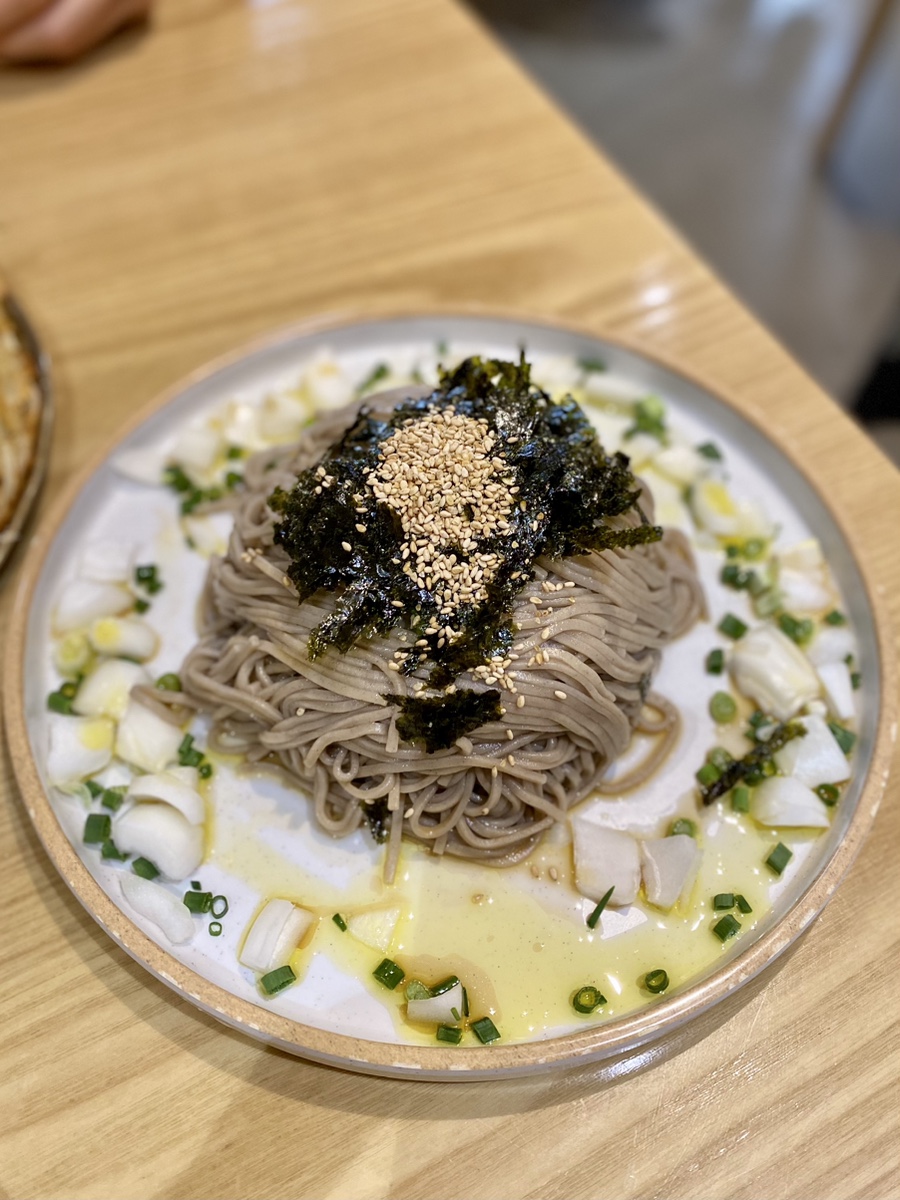
Gyeongju’s Hwangnidan-gil is the city’s most charming street — a stretch of traditional hanok houses turned into cafes, shops and restaurants, right by the royal tombs. If you want to eat well here without the food being an afterthought, Cheongonchae is my pick: a lovely hanok restaurant on Hwangnidan-gil doing gentle, well-made Korean food, with fragrant perilla-oil noodles as the star.


The setting
Cheongonchae is a classic hanok — tiled roof, wooden beams, a pretty courtyard — right in the heart of Hwangnidan-gil. Big windows let light pour in, so the interior feels bright and open rather than cramped, and the courtyard is a lovely spot for photos while you wait. As a Hwangnidan-gil restaurant it’s the kind of place where the setting is half the meal.


What to order
A quick note first: Cheongonchae changes its menu with the seasons and ingredients, so the exact dishes rotate through the year. Treat the names below as a guide, and check the restaurant’s Naver Map listing for the current menu. The Korean menu has realistic photos, and you can ask for an English menu. Cards accepted.
The signatures that anchor the menu:
Perilla-oil buckwheat noodles (deulgireum memil-guksu) — around 10,000 KRW
This is the dish to get. Buckwheat noodles tossed in perilla oil (a nutty, toasty Korean sesame-family oil) with soy seasoning — available as a soy version or a spicier bibim version. The first bite tastes almost too subtle, then you mix it well and the seasoning lands perfectly: nutty, savory, not remotely heavy. It’s the kind of gently addictive, un-fussy food that’s genuinely hard to find.
Yukhoe bibimbap — around 14,500 KRW
A colorful bibimbap topped with yukhoe (fresh Korean-style raw beef) and, in the current version, minari (water dropwort). You can choose a soy or gochujang (chili paste) seasoning; the gochujang isn’t very spicy. The beef is fresh and clean-tasting, with sweet pear slices cutting through. (When I first visited it was a plain yukhoe bibimbap; it’s since become the minari version — a good example of how the menu evolves.)

Cheese potato pancake — around 13,000 KRW
Order one to share. Crispy on the outside, and the spicy-ish dipping soy cuts any richness. It pairs especially well with the perilla-oil noodles.

There are usually also braised or hot-pot dishes (like a nurungji short-rib jjim), which are ordered for two or more — the English menu spells out which dishes need a minimum. Complimentary banchan comes with the meal, including a little gomtang broth.


Waiting: what to know
Cheongonchae is popular and usually has a queue, especially around the breaks. A few practical tips:
- Waiting is via the Catchtable app — you can register on-site or remotely through the app, and you can also book a reservation. There’s a separate waiting area to sit in.
- You choose your menu when you register for the queue.
- One important catch: after you register, if you’re not called in by 3:00pm for lunch or 8:00pm for dinner, your spot can be cancelled. Don’t wander too far.
- To skip the wait entirely, arrive at opening (11:00am).

Details
- Location: Hwangnidan-gil area, Gyeongju (Google Maps)
- Hours: 11:00am–8:30pm daily, break 3:30–5:00pm (last order 3:20pm / 8:00pm)
- Ordering: Korean menu with photos, English menu on request; cards accepted
- Menu note: dishes change seasonally — check the Naver Map listing for what’s current
Verdict
For a hanok restaurant on Hwangnidan-gil that treats the food as seriously as the setting, Cheongonchae delivers: nutty perilla-oil noodles, fresh yukhoe bibimbap, and a bright, photogenic space to enjoy them in. Come at opening to beat the queue and order the buckwheat noodles — it’s exactly the kind of gentle, local meal the city does best. Still deciding where to eat on the street? I’ve compared all the spots worth your time in my Hwangnidan-gil restaurant guide, part of planning the rest of a Gyeongju trip.
