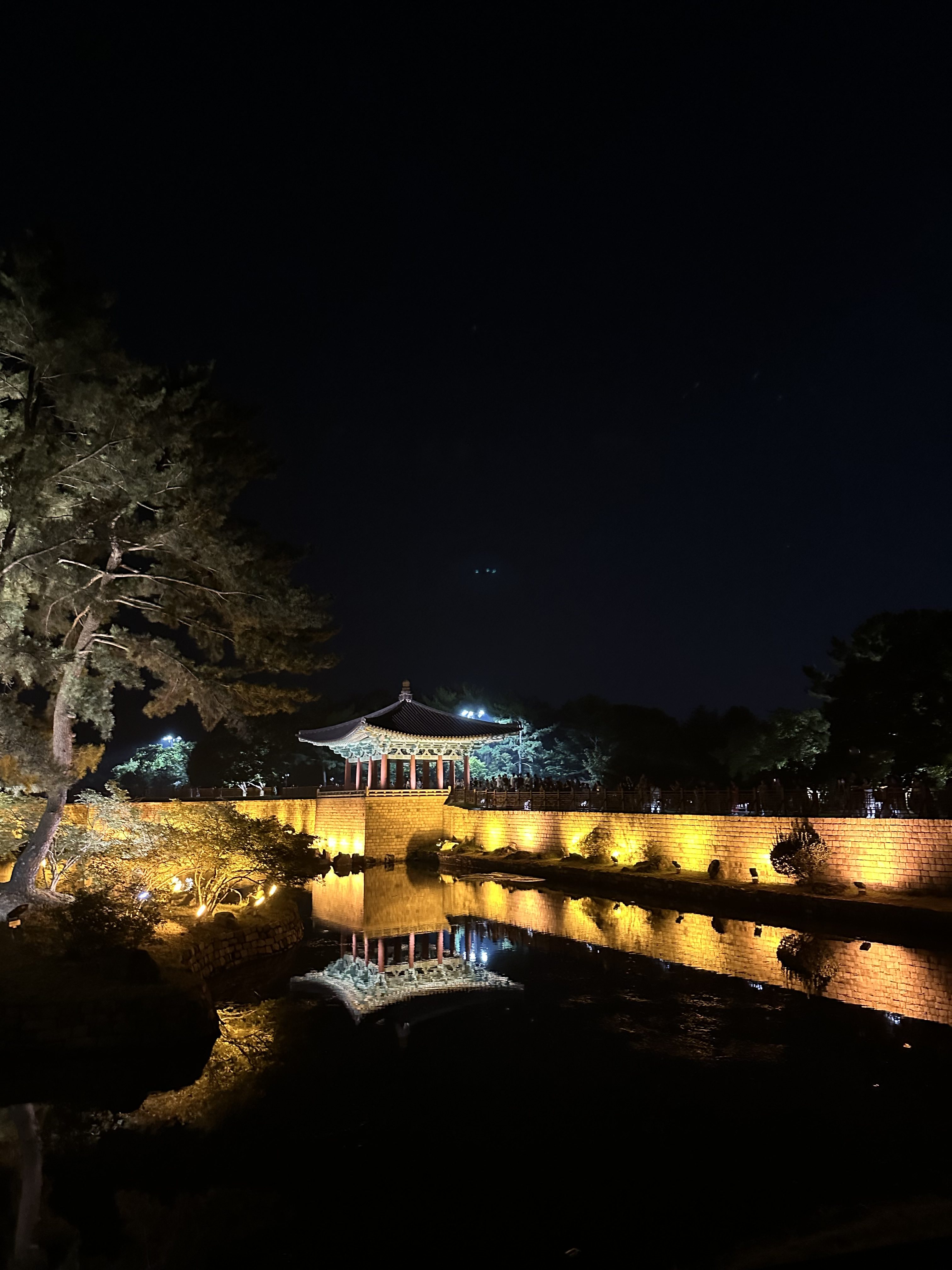
If Seoul is where Korea’s present lives, Gyeongju is where its past does. For nearly a thousand years this was the capital of the Silla kingdom, and today the whole city reads like an open-air museum — royal tombs rising out of public parks, a 1,400-year-old observatory standing in a field, a palace glowing over a pond at night. It’s the best “next stop” after Seoul, and with Korea’s regional travel booming in 2026, more foreign visitors are finally making the trip.
Here’s how I’d spend two days there — and the good news for anyone not renting a car: this Gyeongju itinerary is entirely walkable, with Day 1 covering the city’s Silla-era core on foot.

Getting to Gyeongju
- From Seoul: KTX from Seoul Station to Singyeongju Station takes about 2 hours. From Singyeongju, the historic center is a 15-minute taxi ride, or a local bus (routes 70, 50, 60, 61) into town.
- Getting around: The entire Day 1 route below is walkable in good weather — the furthest stretch (Hwangnidan-gil to Wolji Pond) is about 1.8 km. No car, no rental bike required, though a bike makes it even easier.
- When to go: Spring (cherry blossoms) and fall (foliage) are genuinely some of Korea’s prettiest scenery here — but expect crowds and book accommodation early. Summer is hot; start early, rest midday, and save the big sights for the cooler evening.
Day 1: The historic center, entirely on foot
The whole day loops through Gyeongju’s Silla-era core. Base yourself around Hwangnidan-gil (Google Maps) and everything else is a comfortable walk.
Hwangnidan-gil
Start on Gyeongju’s most famous street: traditional tile-roofed buildings turned into cafes, dessert shops, craft stores, and restaurants. It’s the city’s trendy heart, and it doubles as your base for meals and coffee throughout the day — I’ve rounded up the best things to eat here in a separate guide: Hwangnidan-gil Food Guide. The royal tombs of Daereungwon sit right alongside it — the classic hanbok photo spot, with rental shops nearby.


Cheomseongdae
A flat, easy walk away stands Cheomseongdae (Google Maps), a 7th-century stone observatory and one of the oldest surviving astronomical structures in the world. Modest in size but genuinely ancient, it sits in open fields that turn pink with cosmos flowers in autumn.

Donggung Palace & Wolji Pond — stay for the lights
Continue on foot to Donggung Palace and Wolji Pond (Google Maps) — the furthest point of the day, about 1.8 km from Hwangnidan-gil. Beautiful by day, but the reason to time your visit for dusk is the night lighting: the reconstructed Silla palace mirrored on the still pond is the image that ends up as everyone’s favorite photo of the trip.

Woljeonggyo Bridge
End the night at Woljeonggyo (Google Maps), a grand restored wooden bridge from the Silla era. Lit up after dark and reflected on the water, it’s the perfect quiet finale to a day on foot — far less crowded than Wolji Pond, and just as photogenic.

Where to stay: sleeping in a traditional hanok is part of the Gyeongju experience. One honest tip for foreign travelers — some of the loveliest hanok stays sit in remote spots that really need a car (lovely, but a hassle without wheels). For a first trip, I’d pick something near Hwangnidan-gil so you can walk everything: a place like Seorastay is affordable and well located for exactly this.

Day 2: Your choice of pace
Day 1 covers Gyeongju’s walkable greatest hits. For Day 2, pick your speed:
- Temples in the hills: Gyeongju’s UNESCO-listed Bulguksa temple and the Seokguram Grotto are the famous out-of-town sights. I didn’t make it on this trip, but the easy way to go car-free is bus 10 or 11 from Hwangnidan-gil, which runs straight there.
- Slow it down: linger over Hwangnidan-gil cafes, revisit the tombs by daylight, or add Gyeongju National Museum.
- Either way, before you leave, grab the city’s classic souvenir for the train home: Gyeongju-ppang (a thin red-bean pastry) or Gyeongju-sand (a buttery pastry sandwich that travels especially well).
A realistic Day 1 timeline
Hwangnidan-gil (late morning, coffee + browse) → Cheomseongdae (afternoon) → dinner back on Hwangnidan-gil → Donggung & Wolji Pond (dusk, for the lights) → Woljeonggyo (after dark) — all on foot.
Local tips
- Time Day 1 so you hit Wolji Pond and Woljeonggyo after dark — the night lighting is the whole payoff, and both are within walking distance of dinner.
- Book hanok stays and blossom-season trips early; Gyeongju fills up fast in spring and fall.
- Staying near Hwangnidan-gil keeps the whole trip car-free. Save remote hanok stays for a trip where you’re driving.
- You’re already halfway to Busan on the KTX line — easy to pair the two.
Verdict
Gyeongju is the easiest way to understand how old Korea actually is — not in a museum, but walking among tombs, observatories, and palaces that have stood here for over a millennium. Two days, one hanok night, and a box of Gyeongju bread or Gyeongju-sand for the train home — no rental car required. Seoul shows you where Korea is going; Gyeongju shows you where it’s been.
