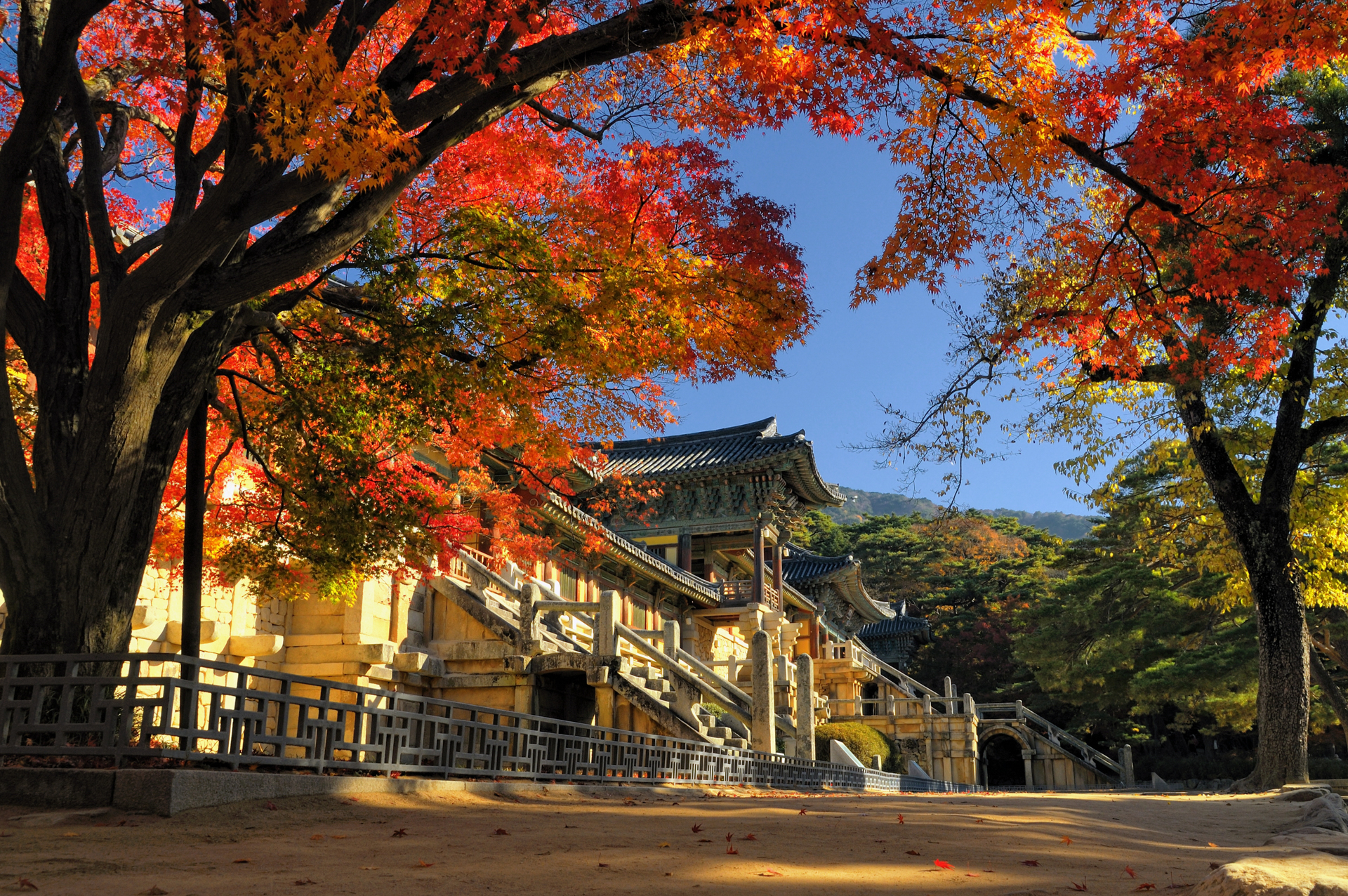
Gyeongju is worth visiting any time of year — it was the capital of the Silla kingdom for nearly a thousand years, and the whole city is an open-air museum of tombs, palaces and temples. But if you can choose when to go, choose autumn. Gyeongju in autumn is the ancient capital at its absolute best: grassy royal tombs, reconstructed palaces and long ginkgo-lined streets, all turning red and gold under crisp blue skies.
Here’s when the color actually peaks, where to see it, and how to plan a trip around it.

When the leaves peak (this is the tricky part)
Autumn color in Gyeongju generally peaks from late October into early-to-mid November — but here’s the detail most guides miss: ginkgo trees and maples peak at different times, so the right dates depend on what you want to see.
Based on Gyeongju city’s own foliage guide:
| Spot | Peak | What you’ll see |
|---|---|---|
| Bulguksa Temple | ~late Oct – early Nov (roughly Nov 10–20) | Maple foliage around the temple grounds; pond and stair photo spots |
| Gyeongju Millennium Forest | early–mid Nov | Metasequoia, larch and maples together |
| Dorimaeul Ginkgo Forest | early Nov | A lane of ginkgo trees turning brilliant yellow |
| Cheomseongdae pink muhly | mid-Sept onward, through October | Pink muhly grass and cosmos with an autumn mood |
How to plan around it:
- Want red maples? Aim for late October to early November — Bulguksa and the Millennium Forest are the targets.
- Want golden ginkgo? Early November is the window, with Dorimaeul the highlight (fallen leaves carpet the ground too).
- Want the pink muhly shots? Those come earlier — mid-September into October.
One honest caveat: foliage shifts by 1–2 weeks each year depending on summer heat and rainfall. The Korea Meteorological Administration releases its official forecast in early September, so check it — and recent on-the-ground photos — close to your dates. A hot summer (like 2026’s) tends to push color later.
Avoid the Chuseok holiday. Chuseok — Korea’s biggest holiday, the Korean harvest festival — falls in autumn (its dates move each year on the lunar calendar, usually landing in late September or October, near the start of foliage season). Gyeongju is one of the most popular domestic-travel destinations during Chuseok, so its sights, roads and restaurants get extremely crowded, and many small eateries close for the holiday. Check when Chuseok falls in your travel year, and if your trip is flexible, plan your Gyeongju foliage visit for a normal weekday instead.

Where autumn hits hardest
Bulguksa Temple (the autumn headliner)
If there’s one place to prioritize in fall, it’s Bulguksa — Gyeongju’s UNESCO-listed temple, and one of Korea’s most famous spots for autumn foliage. The maples around its stone terraces, ponds and staircases turn the whole complex into a postcard, and it’s renowned enough among Koreans that it’s worth building your dates around. It’s a little outside the center — the easy car-free way is bus 10 or 11 from Hwangnidan-gil, which runs straight there.
The royal tombs and Cheomseongdae
The grassy burial mounds of Daereungwon, and the open fields around the ancient Cheomseongdae observatory, take on a completely different mood in autumn — cosmos and pink muhly grass earlier in the season, golden light later. This is also the classic hanbok photo area, and autumn is the prettiest backdrop for it.

Ginkgo streets
For that glowing-yellow-tunnel look, the Dorimaeul ginkgo forest peaks in early November, when the trees turn gold and the fallen leaves carpet the path.

The night views are even better in autumn
Gyeongju’s famous illuminated sights don’t change with the seasons — but crisp autumn evenings are the best time to see them, without summer’s humidity or winter’s cold. Donggung Palace and Wolji Pond, mirrored on still water after dark, is the image everyone remembers from a Gyeongju trip, and nearby Woljeonggyo bridge is a quieter, equally photogenic finale.


Time your evening so you catch these after sunset — it’s the payoff of the day.
How to put it all together
The good news: most of central Gyeongju is walkable, and you don’t need a car. My full walking plan — Hwangnidan-gil, Cheomseongdae, Wolji Pond and Woljeonggyo, all on foot — works beautifully in autumn, just with better color and cooler air. See my car-free Gyeongju itinerary for the day-by-day route, and add Bulguksa by bus if you’re chasing maples.
While you’re there:
- Base yourself on Hwangnidan-gil, the city’s trendy hanok street. Graze on the best street food there between sights, and for proper sit-down meals and cafes, my guide to the best Hwangnidan-gil restaurants sorts them by what you’re craving — warming noodles and galbijjim are especially good in cool autumn weather.
- For somewhere to stay, a hanok stay one minute from Hwangnidan-gil puts you in the middle of everything.
- Take home a box of Gyeongju Sand cookies — the local buttery souvenir.
Getting there
Gyeongju is on the KTX line, about 2 hours from Seoul to Singyeongju Station, then a short bus or taxi into the center. It works as a long day trip, but autumn is worth an overnight so you can catch both the foliage by day and the illuminated sights after dark.
Frequently asked questions
When is the best time to see autumn foliage in Gyeongju?
Color generally peaks from late October into early-to-mid November, but ginkgo and maple peak at different times: for red maples (Bulguksa, the Millennium Forest) aim for late October to early November, and for golden ginkgo (Dorimaeul) early November is the window. Pink muhly grass comes earlier — mid-September through October. Foliage shifts a week or two each year, so check the Korea Meteorological Administration’s September forecast close to your dates.
What makes Gyeongju special in autumn compared to Seoul?
Gyeongju pairs fall color with something no other Korean city has: a thousand years of Silla history in the open air. You get red maples framing a UNESCO temple (Bulguksa), golden light over grassy royal tombs, and ginkgo streets — plus illuminated palaces mirrored on ponds after dark. It’s history and foliage in one compact, walkable city, which is why locals rate it as one of the country’s best autumn trips.
For the city side of the comparison, here’s a local’s guide to where autumn peaks in Seoul — palace gardens, ginkgo streets and Han River color.
Where is the best autumn foliage in Gyeongju?
Bulguksa Temple is the headliner for maples; the Dorimaeul ginkgo forest is the spot for golden ginkgo tunnels; and the Daereungwon royal tombs and Cheomseongdae area shift from pink muhly and cosmos early in the season to golden light later. For night views, Donggung Palace and Wolji Pond reflected on the water is the classic Gyeongju image.
Can you visit Gyeongju in autumn without a car?
Yes. Most of central Gyeongju is walkable, and Bulguksa is reachable by bus 10 or 11 from Hwangnidan-gil. Base yourself on Hwangnidan-gil and you can cover the tombs, Cheomseongdae, Wolji Pond, and Woljeonggyo on foot. Here’s my car-free Gyeongju itinerary.
How do you get to Gyeongju from Seoul, and is a day trip enough?
Take the KTX to Singyeongju Station (about 2 hours from Seoul), then a short bus or taxi into the center. It works as a long day trip, but autumn is worth an overnight — you catch the foliage by day and the illuminated palace and bridge after dark, which is the real payoff.
Should I avoid the Chuseok holiday?
Yes. Gyeongju is one of Korea’s most popular domestic-travel spots during Chuseok (the harvest holiday, which lands in late September or October and shifts each year with the lunar calendar), so sights and roads get packed and many small eateries close. Check the dates for your travel year and plan your foliage visit for a normal weekday if you can.
Verdict
Gyeongju in autumn is a rare combination: thousand-year-old history and genuinely spectacular fall color, in a city compact enough to see on foot. Aim for late October to early November, check the forecast before you lock in dates, catch the maples at Bulguksa and the ginkgo at Dorimaeul, and end each day with the illuminated palace mirrored on the pond. It’s Korea’s ancient capital at its most beautiful — plan ahead and time it right.
