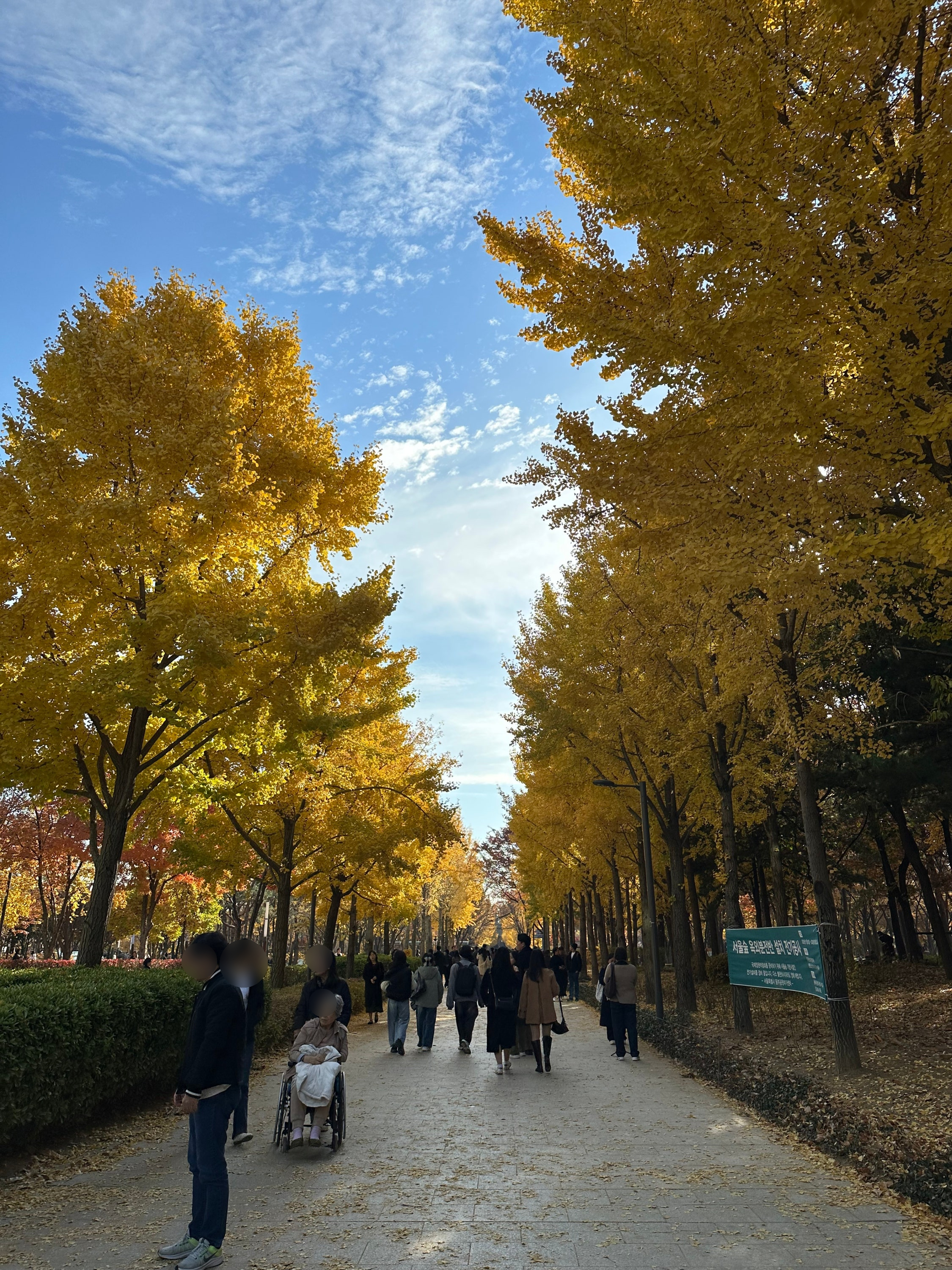
If you can pick any season to visit Seoul, pick this one. Autumn in Seoul is the city at its finest — clear blue skies, crisp cool air, and palace gardens, ginkgo-lined streets and parks all turning red and gold. After the brutal humidity of summer, the first cool morning feels like the whole city exhales.
Here’s when the color peaks, and where I actually go to see it.

When the leaves peak
Seoul’s foliage builds through late October and peaks in early November — the low-lying city colours a little after the higher mountains that ring it, like Bukhansan. Exact timing shifts each year and varies spot to spot, so it’s worth checking the official forecast close to your dates. A rough guide:
| Where | Peak |
|---|---|
| Bukhansan / Namsan (higher ground) | late October – early November |
| City parks, palace gardens, ginkgo streets | early November |
| Fallen leaves | mid-November onward |
Golden ginkgoes tend to turn slightly before the red maples, and the absolute peak only lasts 7–10 days. A local caveat worth heeding: with climate change and warmer autumns, the foliage has been trending toward a later start and a shorter peak — the window you can count on is narrower than it used to be. Aim for the first half of November, and check the Korea Meteorological Administration’s foliage forecast (released in September) close to your trip so you can time it to the actual peak that year. One scheduling note: Chuseok (Korean Thanksgiving) falls on September 24–27 in 2026 — trains and hotels are packed over that holiday, so avoid traveling then if you can. Chuseok follows the lunar calendar, so its dates shift every year; double-check the exact dates for the year you’re visiting.
The palace gardens
Nothing frames autumn like a 600-year-old palace. Gyeongbokgung is the grand one, its wide courtyards and painted eaves set against ginkgo gold — see my full Gyeongbokgung guide for how to visit. For the most atmospheric fall color, though, locals point to Changdeokgung’s Secret Garden (Huwon) — a 600-year-old woodland garden of pavilions and ponds where the maples turn some of the deepest reds in the city. It’s guided-tour only, and worth booking ahead in peak season.
Tip: wearing hanbok gets you free entry to the main palace grounds — and autumn is the prettiest backdrop for those photos.
The parks and ginkgo streets
This is where I actually spend autumn days.
Seoul Forest (Seongsu) has a ginkgo avenue that turns into a glowing yellow tunnel — one of the most photogenic spots in the city, and easy to reach. See my full guide to Seoul Forest park for what else to do there.
Olympic Park (Jamsil side) is huge and gentle, with rolling lawns, a lake, and long tree-lined paths; from the higher ground you get autumn color layered against the city skyline and Namsan Tower.


Namsan frames the city’s most iconic view — the tower rising above wooded slopes that shift red and orange. The walking trails up are far quieter than the cable car, especially early morning.

A local’s tip most guides miss: Seoul’s university campuses are gorgeous in autumn and barely on the tourist radar. Kyung Hee University in particular is famous among Koreans for its European-style buildings framed by red maples and a pond that mirrors the color. They’re free, open, and refreshingly uncrowded compared to the palaces.

Something different: Haneul Park’s silver grass
Not all autumn color is red and gold. Haneul Park, on a hill by the Han River, fills in October with shimmering silver grass (eoksae) — tall, feathery plumes that catch the light and turn the whole hilltop silver. There’s a Silver Grass Festival around mid-to-late October. It’s a climb up, but the payoff is a completely different autumn palette from the maples.

What about the Han River?
I’ll be honest, the way I was in my summer guide: the Han River is spectacular in autumn — but by the time the leaves peak in November, it’s genuinely chilly by the water, too cold for the long picnics that make the river magic. If you go, treat it as a brisk scenic walk or bike ride rather than a sit-down afternoon, and bundle up. (For when the weather’s right, here’s renting a bike along the river and a picnic at Ttukseom — better saved for a mild day.)
Going further: autumn day trips
If you have a spare day, autumn is a great time to leave the city — just note that peak timing varies by region. Nami Island, to the northeast, tends to colour a little before Seoul, while Gyeongju in the south peaks around the same time or slightly later, so check each spot’s forecast rather than assuming.
- Gyeongju — Korea’s ancient capital, with royal tombs and temples under red maples. See my guide to Gyeongju in autumn.
- Nami Island — the famous tree-lined lanes at their golden best. See my guide to Nami Island in autumn, and how to get to Nami Island from Seoul for the transport.
- Everland (just outside Seoul) — Korea’s big theme park goes all-in on autumn, with the hillsides and gardens in full color.

Practical tips
- Layer up. Early November days are mild (12–16°C) but mornings and evenings drop toward single digits.
- Go early. Popular spots like Seoul Forest and the palaces are quietest before mid-morning, with the best light for photos.
- Weekdays beat weekends at every foliage spot — peak-season weekends draw serious crowds.
- Track the foliage index from early October to see exactly where the color has reached.
- Avoid Chuseok (Sept 24–27 in 2026; dates change yearly with the lunar calendar) for travel if you can.
Frequently asked questions
When is autumn in Seoul, and when do the leaves change?
Seoul’s foliage builds through late October and peaks in the first half of November, with the higher ground around the city (Bukhansan, Namsan) turning a little earlier. Golden ginkgoes turn slightly before the red maples, and the absolute peak lasts only about 7–10 days. Warmer autumns have been pushing the peak later and making it shorter, so check the Korea Meteorological Administration’s foliage forecast (released in September) close to your trip.
Is Seoul worth visiting in October or November for fall colors?
Both work, but they’re different trips: October brings the best weather and thinner crowds, though the city stays mostly green until the very end of the month. November is when the color actually arrives — the first half is peak, the second half tips into fallen leaves. If foliage is your priority, choose November; if you want mild weather and treat color as a bonus, October is lovely too.
Where are the best places to see autumn colors in Seoul?
For palace color, Changdeokgung’s Secret Garden has some of the deepest maple reds; Gyeongbokgung pairs ginkgo gold with grand courtyards. For parks, Seoul Forest’s ginkgo avenue and Olympic Park’s tree-lined paths are the easiest wins, and Namsan frames the classic tower-and-foliage view. For something different, Haneul Park’s silver grass peaks in October, and Seoul’s university campuses (like Kyung Hee) are gorgeous and uncrowded.
Can you do an autumn day trip from Seoul?
Yes — autumn is a great time to leave the city. Nami Island (northeast) tends to colour slightly before Seoul, and Gyeongju (south) peaks around the same time or a little later, so check each spot’s forecast. Both are doable as a day trip; here are my guides to Nami Island in autumn and Gyeongju in autumn.
What should I wear for autumn in Seoul?
Layers. Early November days are mild (around 12–16°C) but mornings and evenings drop toward single digits, so a light jacket you can add or remove is ideal. It’s noticeably colder by the Han River, so bundle up if you’re near the water.
Should I avoid any dates when traveling to Seoul in autumn?
Yes — Chuseok (Korean Thanksgiving) packs trains and hotels. It falls on September 24–27 in 2026, but the dates shift each year with the lunar calendar, so double-check for your travel year and avoid booking over that holiday if you can.
Verdict
Autumn in Seoul is the easy season to love: mild, clear, and colorful, with palace gardens, golden ginkgo avenues, silver-grass hills, and quiet campus corners all within the city. Aim for the first half of November, check the forecast so you catch the increasingly narrow peak, start your mornings early, layer up for the chill, and if you have a spare day, chase peak color out to Gyeongju or Nami Island. After a Seoul summer, this is the reward.
